Sign up for the latest news
The Transglobal Schools Citizen Science Forum @CERN was inspired by the Transglobal Car Expedition, which on 28 April 2025 successfully completed the world’s first continuous Pole-to-Pole journey — 475 days, 92,500 km, across 5 continents, 42 countries, and 5 oceans.
Led by expedition leader Vasily Shakhnovskiy, the expedition united over 40 explorers, scientists, engineers, and collaborators in an unprecedented test of endurance, innovation, and global cooperation. Along the way, the team collected environmental data, worked with indigenous communities, and documented climate change in some of the most remote regions of our planet.
This inspiring event will provide students with the opportunity to connect, share their citizen science projects, and explore the world of cutting-edge research at one of the world’s leading scientific institutions.
Participants will explore some of the world’s most important particle physics facilities through guided visits and interactive experiences. Possible visits include:
• Synchrocyclotron – One of CERN’s earliest particle accelerators, now transformed into an interactive exhibition space.
• ATLAS Visitor Center & ATLAS Cavern – Discover the famous ATLAS Experiment, one of the largest scientific instruments ever built. (Cavern visit subject to age restrictions.)
• ALICE Exhibition & ALICE Cavern – Learn about heavy-ion physics at the ALICE Experiment. (Located partly on French territory; cavern visit subject to age restrictions.)
• Antimatter Factory – Explore the facility where scientists study antimatter and its properties. (Visit depends on participants’ age.)
Students will take part in engaging scientific workshops designed to introduce real experimental techniques used in particle physics. Workshop options include:
• Cosmic SOS – Detect and analyze cosmic rays reaching Earth.
• Cloud Chamber – Visualize particle tracks from radiation in real time.
• Electron Beams – Learn how particle beams are produced and controlled.
The forum will conclude with a celebratory award ceremony, where outstanding citizen science projects and student contributions will be recognized and celebrated.
Participants will also explore the international institutions that make Geneva a global center for diplomacy and humanitarian work. Visits may include:
• United Nations Office at Geneva
• International Committee of the Red Cross Museum
Litterati is a citizen science project focused on combating litter through a community-driven, data-driven approach. It utilizes a mobile app where users photograph and categorize litter, contributing to a global database that can be analyzed to understand litter patterns and identify problem areas. The project aims to empower individuals to take action against litter, influence policy changes, and promote responsible waste management.
Photography and Upload: Users download the Litterati app and photograph discarded litter.
Categorization: They then categorize the litter using a standardized tagging system, specifying material, product, and brand when possible.
Data Collection: The app geotags each photo, recording the location and time of the litter.
Global Database: This data is added to Litterati’s global litter database, which contains over 6 million pieces of litter.
Analysis and Action: The data is used to identify litter hotspots, understand littering trends, and inform potential solutions.
User-Friendly App: Litterati provides an easy-to-use platform for anyone to participate in litter collection and data contribution.
Crowdsourced Data: The project relies on the collective effort of its community members to gather and analyze litter data on a global scale.
Data-Driven Insights: The collected data provides valuable insights into litter composition, distribution, and potential causes, enabling informed decision-making.
Community Engagement: Litterati fosters a sense of community and encourages collaboration among individuals, businesses, and governments to address the issue of litter.
Impactful Results: Litterati’s data has been used to influence packaging changes, inform policy decisions, and promote greater personal responsibility towards waste management.
Featured in National Geographic, Time Magazine, Fast Company and USA Today, Litterati has become a shining example of how communities are using technology and data to solve our world’s most complex problems.
Kirschner has shared the Litterati story at Fortune 500 companies such as Google, Facebook and Uber, keynoted environmental summits at the Monterey Bay Aquarium and Keep America Beautiful, as well as leading schools including Stanford, MIT and the University of Michigan. He was recently a TED Resident, where he developed Litterati into an idea worth spreading.
Schools worldwide can join the movement — collecting data, reducing litter, and helping shape future waste management policy.

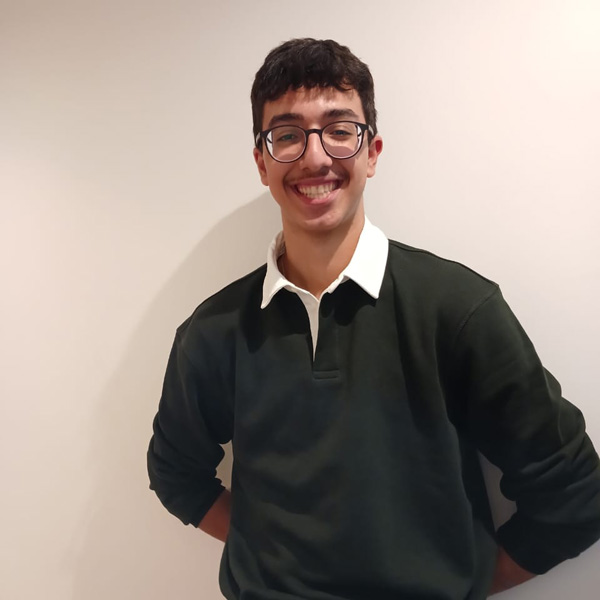
"It all began on a normal school day at 12:30 pm, the lunch break bell had already rung its symphony while I was enjoying some fine gourmet sandwiches that my beautiful mother had prepared that morning. We embarked on this journey with no prior knowledge about particle hunting and were completely ignorant of the concept of citizen science, but we all shared one powerful tool in common: the love of science."
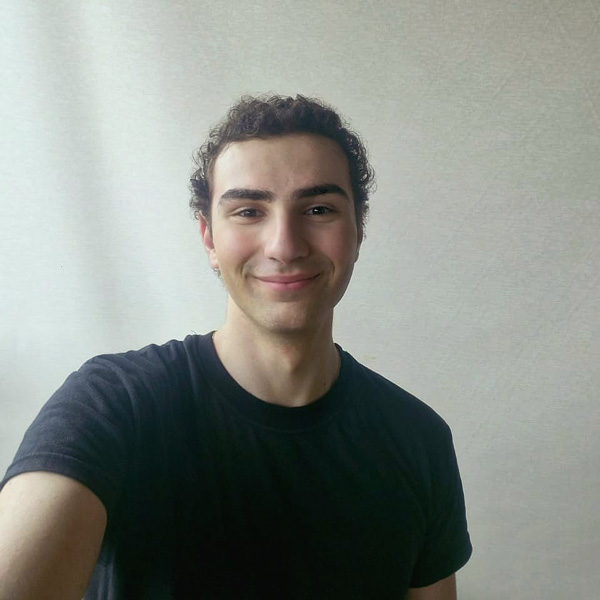
"I was fortunate to be selected for a great team, and together with our teachers, we had a Zoom meeting with the people responsible for the project. They enlightened us about the project and introduced us to the Credo application. The research has deepened my interest in topics I've explored, such as the fascinating story of Fridtjof Nansen, who aided scientists in their quest to understand our Earth. I am really grateful."
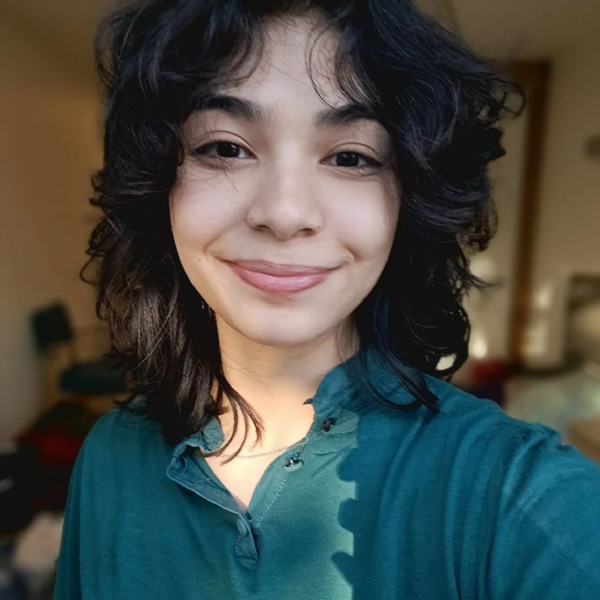
"My journey alongside the CREDO detector has helped me deepen my relationships with my teammates and teachers while continuously pushing my personal boundaries farther every step of the way, filling my mind with a strange clarity and an aspiration to learn about and discover the 'organs' that science reaps for a better understanding of our world's 'barely glimpsed mysteries'."

"My adventure with the project launched by CERN started on a random Thursday at school when our physics teacher suggested a group of students participate in this exciting venture. Five of us accepted the challenge, myself included. I was particularly thrilled to be part of this journey, especially because physics has always been my favorite subject. To be honest, although I had a vague idea that CERN specialized in nuclear research, I didn’t know much about its specific work."
The inaugural Forum brought together students from multiple continents to share findings and experiences from global citizen science projects. It proved that scientific collaboration across borders can inspire and empower the next generation.
The science program of the historic Pole-to-Pole journey provided environmental data, climate records, and citizen science opportunities in some of the most remote places on Earth. This foundation continues to power the Forums and our shared mission of connecting science, exploration, and education.
Citizen Science empowers people everywhere to actively contribute to scientific research. From documenting environmental change to analysing global data, citizen scientists play a vital role in generating knowledge that would be impossible to achieve with traditional research alone.
With smartphones, apps, and digital tools, communities can now collect and process data at unprecedented scales — monitoring environmental factors, identifying global patterns, and shaping solutions to challenges that affect both local and global ecosystems.
Beyond the data, Citizen Science inspires curiosity, builds public awareness, and empowers communities to take ownership of the scientific questions that matter most to them.
The Transglobal Car Expedition crew proudly champions citizen science. Through its Transglobal Schools Citizen Science Forum, students worldwide are invited to take part in innovative projects such as Litterati, a movement using technology and collective action to combat litter while influencing real policy change.
By joining these initiatives, young people and their schools not only advance science but also prepare to share their contributions at global events like the upcoming 2nd Transglobal Schools Citizen Science Forum @ CERN in Geneva, Switzerland in August 2026.
Exactly four months after the Transglobal Car Expedition reached the North Pole the expedition made its way to Geneva, Switzerland. The Transglobal Citizen Science School forum, hosted at CERN and sponsored by the Goodgear Around the World Association, PolarQuest, and the MW Shakhnovskiy Foundation, brought together three teams from Lebanon, Georgia, and Uganda, with a total of around 20 future scientists participating. The generous support of Olga and Vasily Shakhnovskiy, through their family foundation, made this event possible for students from Africa, the Middle East, and the Caucasus, covering all travel expenses to Switzerland and France.
The Citizen Science School Forum at CERN was organized to inspire the next generation of scientists by immersing them in the world of research and discovery. To this end, students were not merely visitors to CERN but active participants, having conducted their own scientific research prior to their arrival at CERN through various citizen science initiatives.
One of the key projects, CREDO, offered students the opportunity to explore one of the theories of Dark Matter. One idea is that it is made of “super-massive particles” born in the early Universe. If this theory proved to be true, while we cannot see such particles directly, we know that at the end of their life they would produce very high energy photons. Interacting with the atmosphere, such photons would create “super-preshowers” of low-energy particles. We are unable to see dark matter particles, but we can observe these super-preshowers – and that is exactly what our citizen scientists did. Equipped with smartphones, the student teams became particle hunters, contributing to the world’s largest cosmic radiation detector by capturing the remarkable number of 404,000 cosmic radiation particles.
Another project, Globe at Night, aimed to raise awareness about light pollution. The citizen scientists engaged in this initiative by measuring the brightness of the night sky, collecting extensive data that highlights the impact of artificial lighting on our environment. Their contributions added valuable data to a global effort to understand light pollution.
At CERN, our citizen scientists were able to engage directly with the scientific processes that power some of the world’s most advanced research. By building Cloud Chambers, analyzing cosmic ray data, and visiting pivotal CERN sites like the Synchrocyclotron, the CERN Control Center and the Antimatter Factory, they saw firsthand how theoretical concepts translate into real-world applications. The students showed remarkable curiosity, showing their deep understanding of the subject matter.
They interacted with not only CERN scientists but also the Transglobal Expedition crew. Among other things, the crew talked about their record of taking the northernmost measurement of cosmic rays. The students also learned about other aspects of the expedition, including the expedition’s use of satellite guidance to make their way in the melting polar ice shelf and the ice thickness in situ measurements, another first in polar science, that the crew has been carrying out while crossing the Canadian Arctic towards the North Pole and back via Greenland. They also got some information on the challenges the expedition crew had to overcome on their journey, travelling around 10,000 km in 4 months, and having had to adapt to extreme climate.
Perhaps the most important aspect of the Geneva program was its potential to inspire. By interacting with scientists and the Transglobal crew, contributing to scientific research with their own citizen science projects, and exploring the inner workings of CERN and the Transglobal Car Expedition, the students were encouraged to further pursue science.
At the end of the event Nakirijja Betty, supervisor for the Uganda team, expressed how much this experience meant to her and her students:
“Thank you for giving us the opportunity to travel here and see the different machines that physicists have made. In our country, we know about the theory part of it, but for the first time, my students and I were able to see the equipment that follows these theories. And I am sure, this experience is going to change a student’s life”.